

About this face preference test
Published · Independent guide and face preference test
What's my type: looks or personality?
The question 'what's my type' can mean visual taste, personality preferences or relationship goals; this page addresses adult faces. You may mean a look you tend to notice, qualities you value in a partner, or a personality framework. This quiz explores the first of those. It cannot answer the other questions from faces alone. Someone can look like your usual type and still be a poor partner, or become attractive through a connection you did not predict.
What's my type when I choose without labels?
For 'what's my type' in pictures, start with your actual choices rather than a checklist of features. Try the 20-crowd exercise without deciding that you must prefer a certain hair color or style. Select faces that appeal to you. Then inspect the common details in your actual choices. If your selections are varied, that is a useful answer too; you do not need a narrow type.
What's my type across different situations?
An answer to 'what's my type' can change with context, styling and the examples in front of you. The portraits, expressions and styling influence the exercise. Use the result to put visual preferences into words, not to exclude people or make an objective ranking. You can stop at the report card or actively choose extra crowds with credits if you are curious about a wider sample.
What's my type if my picks look different?
What's my type if I choose a varied set of faces? A broad preference is still a useful observation. Compare combinations of expression, hair and contours instead of forcing all your choices into one narrow aesthetic label.
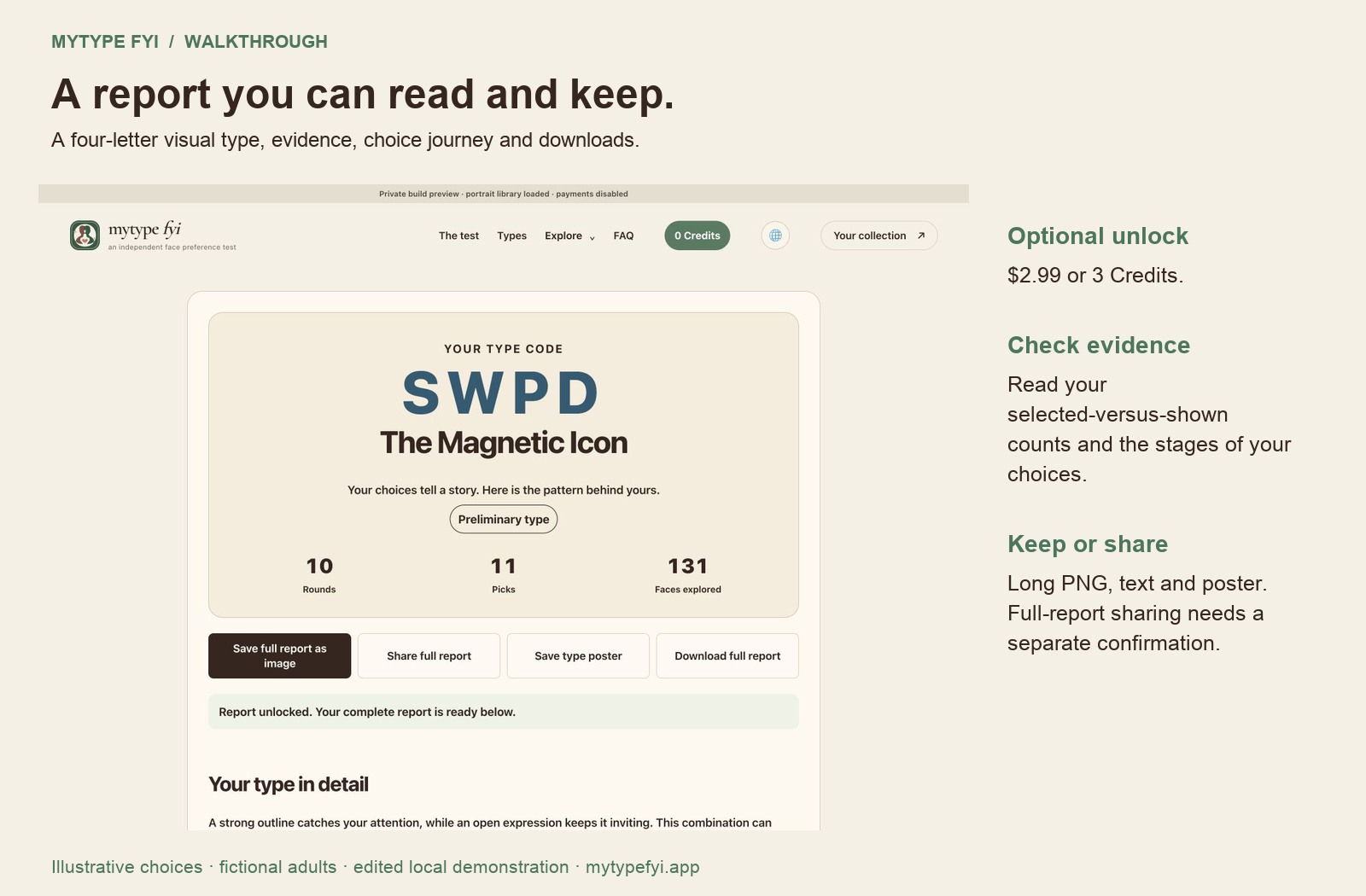
What's my type in a visual result?
What's my type in this result? The card shows selected fictional portraits and tentative feature patterns. It does not identify your own appearance, sexuality or a group of people who would find you attractive.
What's my type beyond a quiz card?
What's my type outside the quiz? Real attraction also involves conversation, familiarity and how people behave together. Keep the card as a vocabulary for visual taste, rather than using it to rule real people in or out.
Sources & scope
For the original service, see MyType’s own explanation and current terms. Our test at mytypefyi.app has its own features, data handling and pricing. Features and prices at other services can change.